Routers

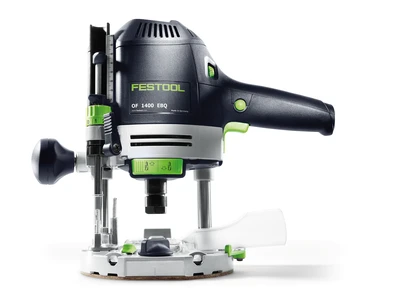
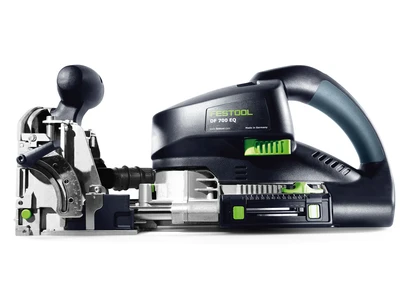
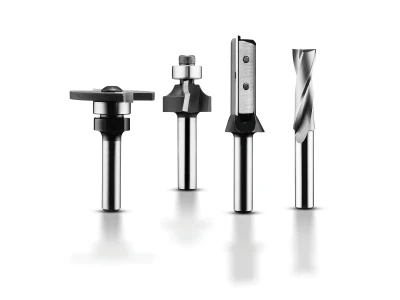
A router is equipped with a powerful electric motor which operates at between 10,000 and 24,000 revolutions per minute. This professional tool, which has been developed for manual operation, allows users to precisely route chamfers and grooves, as well as to profile every type of workpiece. In addition, it is ideal for routing with templates or freehand routing. The router is a tool which is intuitive to operate thanks to its torsionally rigid base plate, interchangeable base runners which can be changed without tools and copying rings as well as uncomplicated router changeover. No workshop should be without one – particularly in combination with additional products from the Festool system, such as the right extractor, guide rails and multi-routing templates.

Application examples
Implement practical ideas with step-by-step instructions
To the application examples
Recessing fittings and hinges in the edge area
Routing
Recessing fittings and hinges in the edge area

Recessing fittings and hinges requires extreme precision in order to guarantee smooth-running functionality and an attractive appearance. This application example explains just how this can be achieved simply and effectively using the router.

Building your own sawhorse with a dovetail joint
Project description, Jointing, Routing, Sawing
Building your own sawhorse with a dovetail joint

The following guide shows you how to build you own deconstructible sawhorse with a dovetail joint. In addition to Festool machinery, a LignaTool routing template is used to make the milled holes.
Producing wooden joints: Milling beam connectors with a routing template and router
Routing
Producing wooden joints: Milling beam connectors with a routing template and router

This guide demonstrates how to produce wooden joints quickly and precisely using the Festool system and beam connectors. It provides a step-by-step explanation of how to set up the router, install the routing template, rout the wooden beams and connect the beams without any visible screws. This process is especially advantageous when users need to produce a number of joints – the Festool system enables craftspeople to repeatedly produce precise wooden joints. 

Routing a recessed handle
Routing
Routing a recessed handle

This Festool illustrated guide provides step-by-step instructions and information about what to look out for when routing a round recessed handle in a wooden front panel. It provides a detailed description of how to prepare by creating a template and adjusting the router and how to proceed. Routing a recessed handle is a particularly suitable solution for sliding doors, as the result is flush with the front of the door.